City Wall
Overview & Design Objective
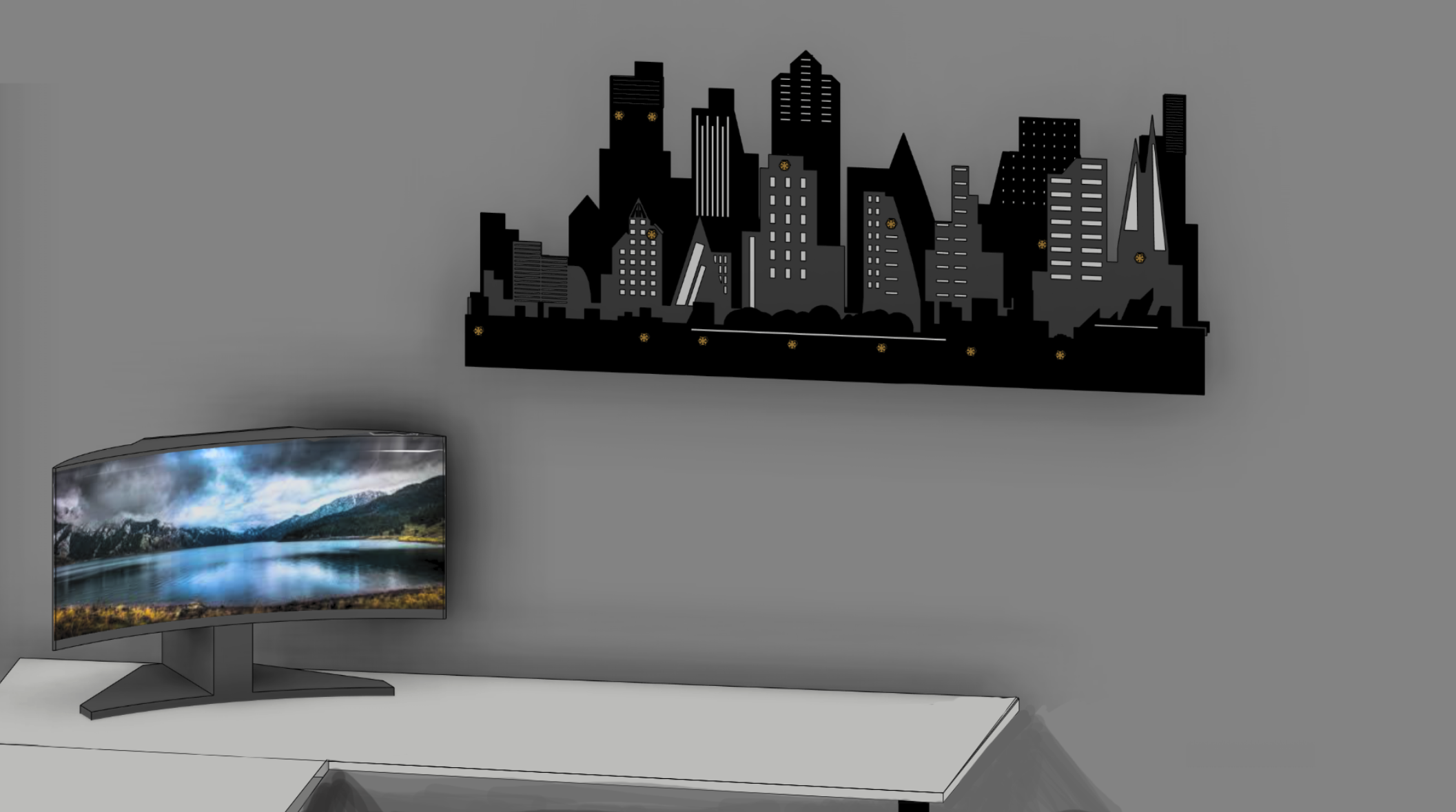
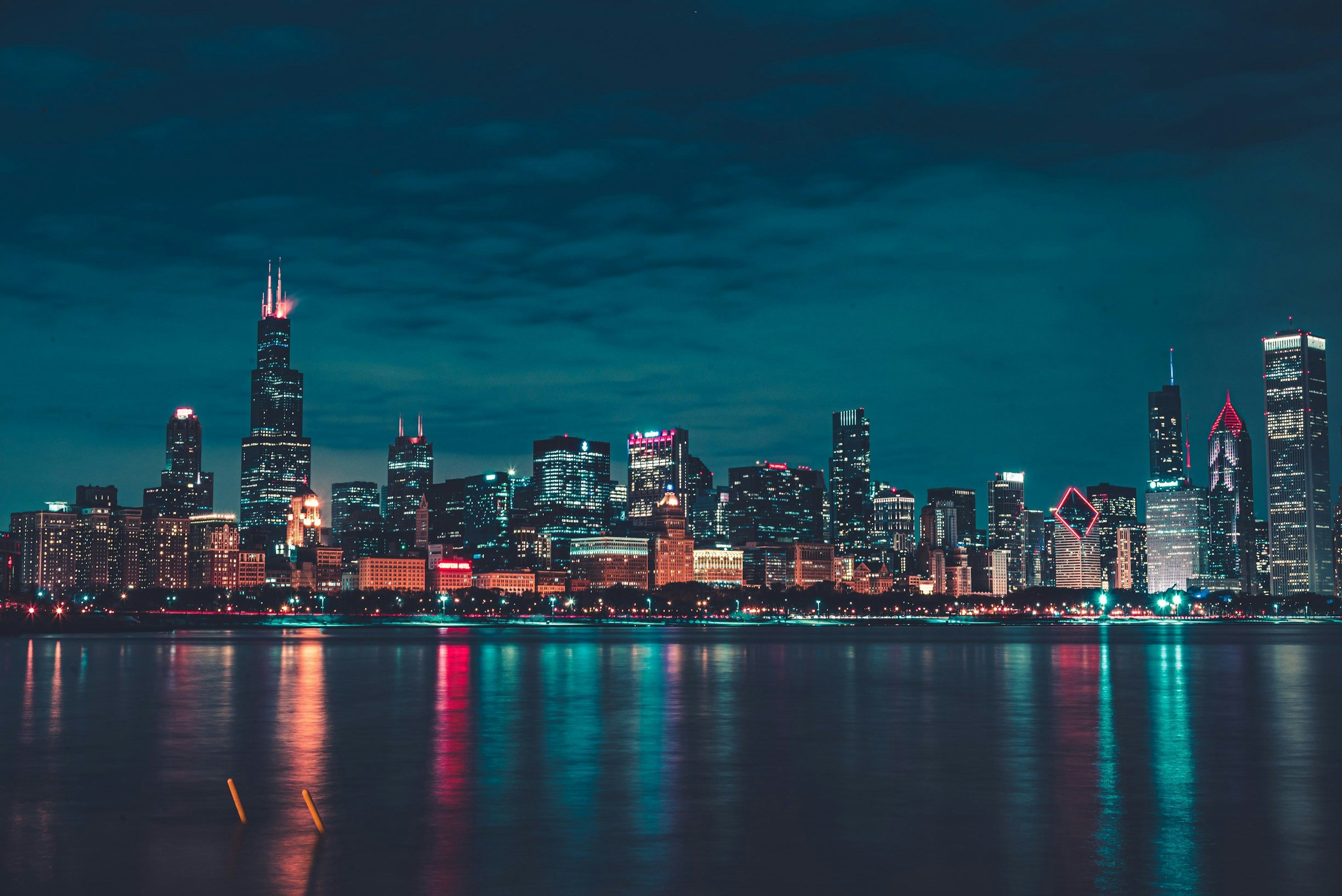
City Wall is a kinetic, experiential installation that synthesizes the latent energy of urban environments into an abstract, responsive architectural skin. The objective was to capture the atmospheric density of a metropolis at night without resorting to literal skyline replication. The resulting work represents a rigorous duality: a sophisticated piece of artistic expression underpinned by industrial-grade mechanical engineering.
System Architecture & Integration
The primary structure consists of a modular, precision-engineered tubular steel framework supporting a multi-layered façade assembly. The system’s optics utilize individually addressable LED matrices paired with frosted optical-grade acrylic diffusion, ensuring high-fidelity light dispersion across every aperture. The system is managed by a centralized computational control layer, designated the "Governor Server," which executes complex, per-node lighting animation algorithms to simulate independent building and window-level activity across the installation.
The software environment utilizes randomized occupancy simulation, transition sequences, and synchronized city-wide environmental scenes. By managing the luminosity and state of every pixel independently, the system ensures that no two temporal states are identical, creating a living, shifting digital landscape.
Engineering & Materiality
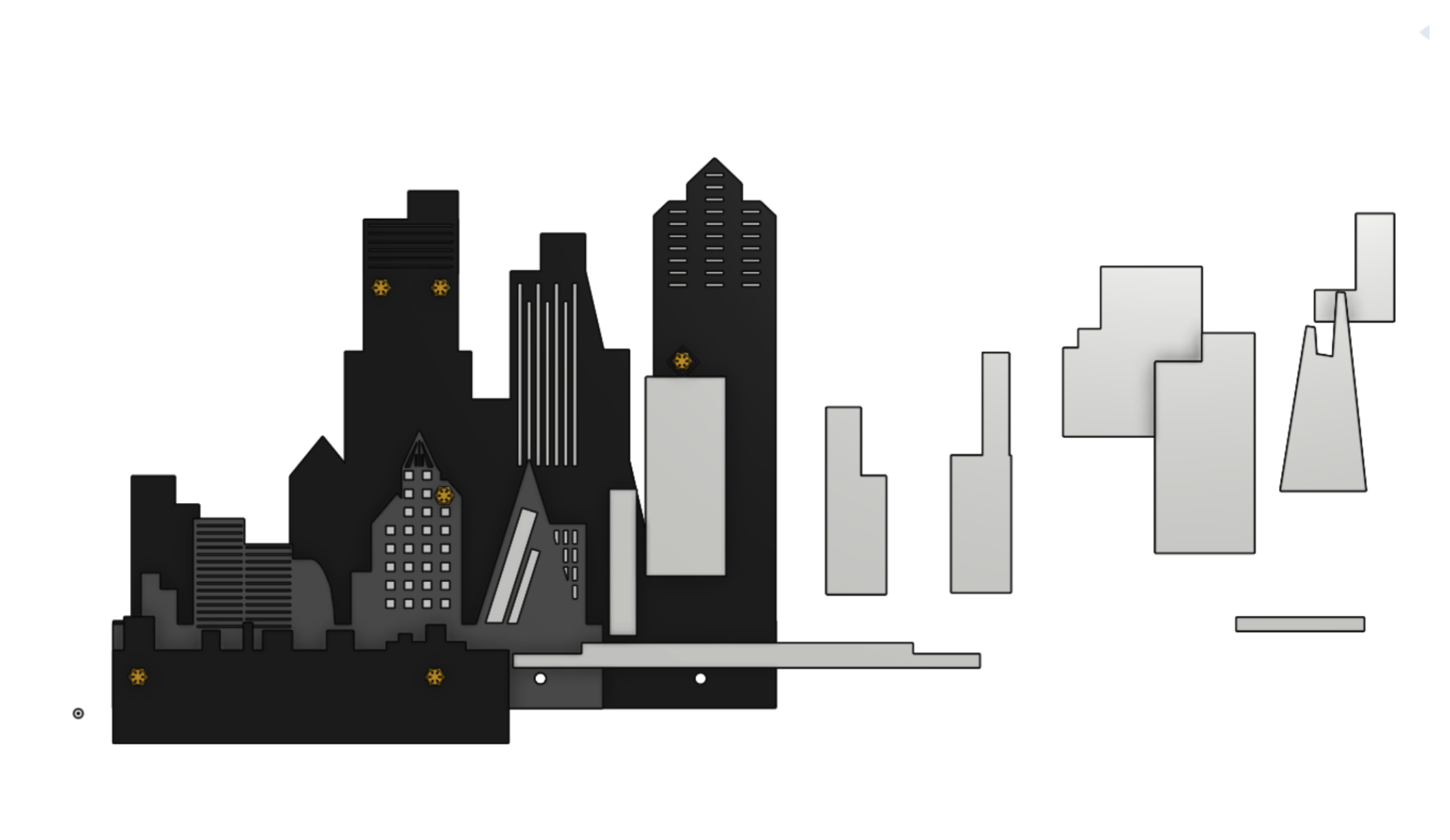
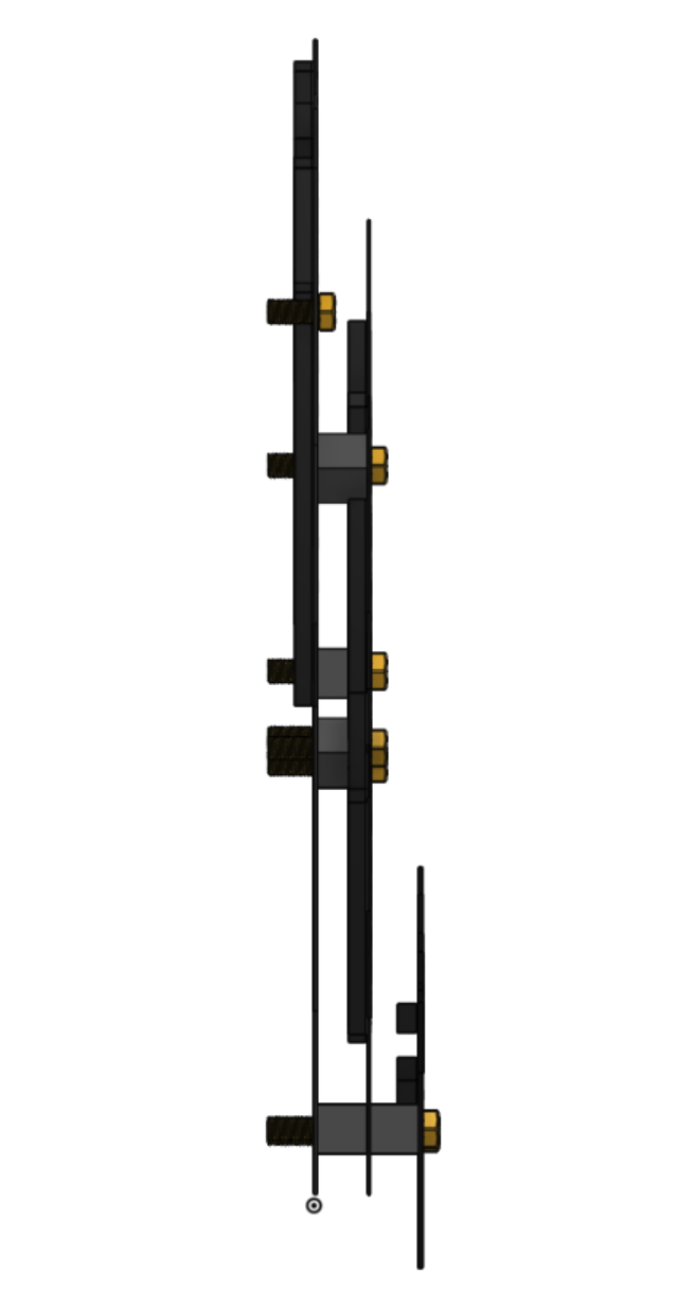
The project employs a design-driven "honest engineering" approach, where mechanical fasteners and structural hardware are not concealed but utilized as integral visual components. This assembly method prioritizes a scalable, modular architecture, facilitating streamlined field maintenance and rapid disassembly for logistics.

The Practical
Mounting System: Final wall mounting solution — TBD
Structural Design: Internal layered structure designed around bolt-together steel tube spacers
Assembly Method: Modular mechanical assembly for easier servicing and disassemble
Aesthetic Features: Exposed hardware and fasteners intentionally integrated as part of the visual design language
Lighting Control: Individually addressable LED lighting with centralized scene control
Diffusion System: Frosted acrylic light diffusion behind each building façade
Control Architecture: Centralized “Governor Server” for per-window and per-building animation control
Programming Features: Custom animated lighting scenes, randomized occupancy simulation, and synchronized environmental effects
Materials: Steel, acrylic, custom electronics, and modular internal framing
Dimensions: TBD
Power Requirements: TBD
Estimated Cost: TBD
Project Status: Concept / Prototype Development Stage